The fireworks over Yas Marina Circuit have barely faded, but history has already been written in bold Papaya orange. The 2025 Abu Dhabi Grand Prix will be remembered as the coronation of a new era. McLaren Racing has not only secured back-to-back Constructors’ World Championships (2024 and 2025) but has finally reclaimed the Drivers’ World Championship through the brilliance of Lando Norris. This marks the team’s first “Double” since the glory days of the late 90s, cementing a resurgence that few believed possible just three years ago.
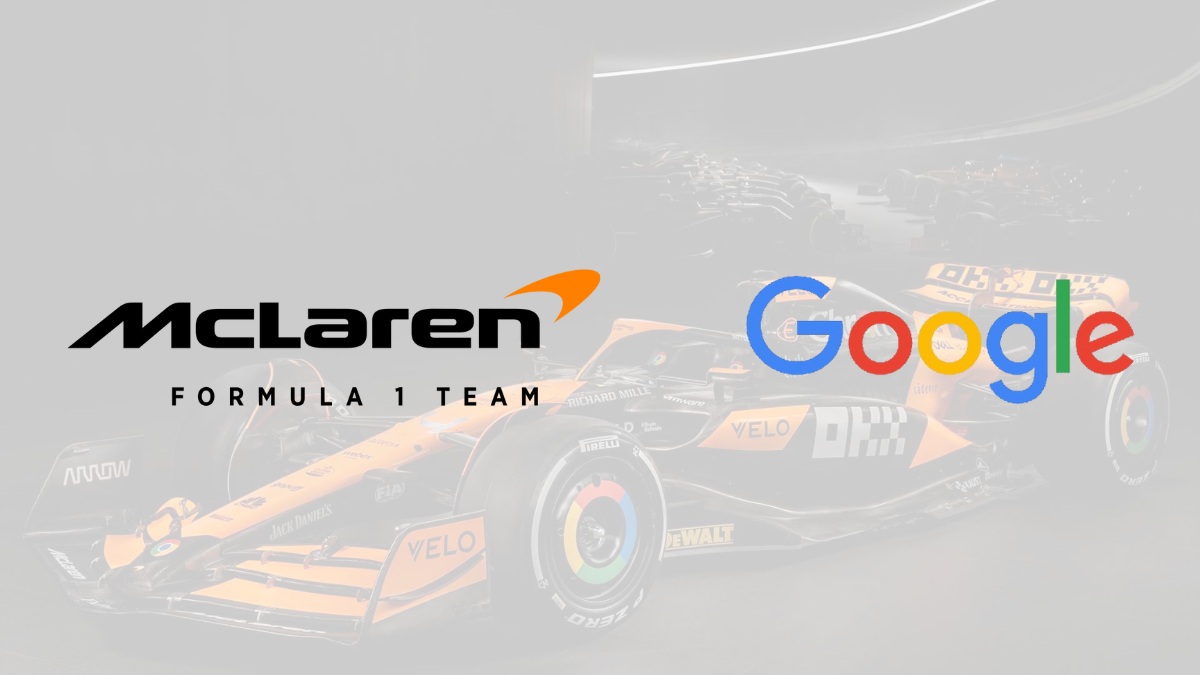
While the champagne is sprayed by Norris and Oscar Piastri on the podium, and Team Principal Andrea Stella is hoisted onto shoulders, the true MVP of this season sits silently in the server racks and fiber optic cables connecting Woking to the world. That MVP is Google Cloud.
In a sport where the margin of victory has shrunk to thousandths of a second, McLaren’s dominance wasn’t just built on aerodynamics or engine power—it was built on data. As the Official Cloud and Preferred Technology Partner, Google Cloud provided the artificial intelligence (AI) and data analytics infrastructure that turned a fast car into a “smart” weapon. This article uncovers the technological secrets behind McLaren’s historic 2025 double title win, exploring how cloud computing became the decisive factor in defeating Red Bull, Mercedes and Ferrari.
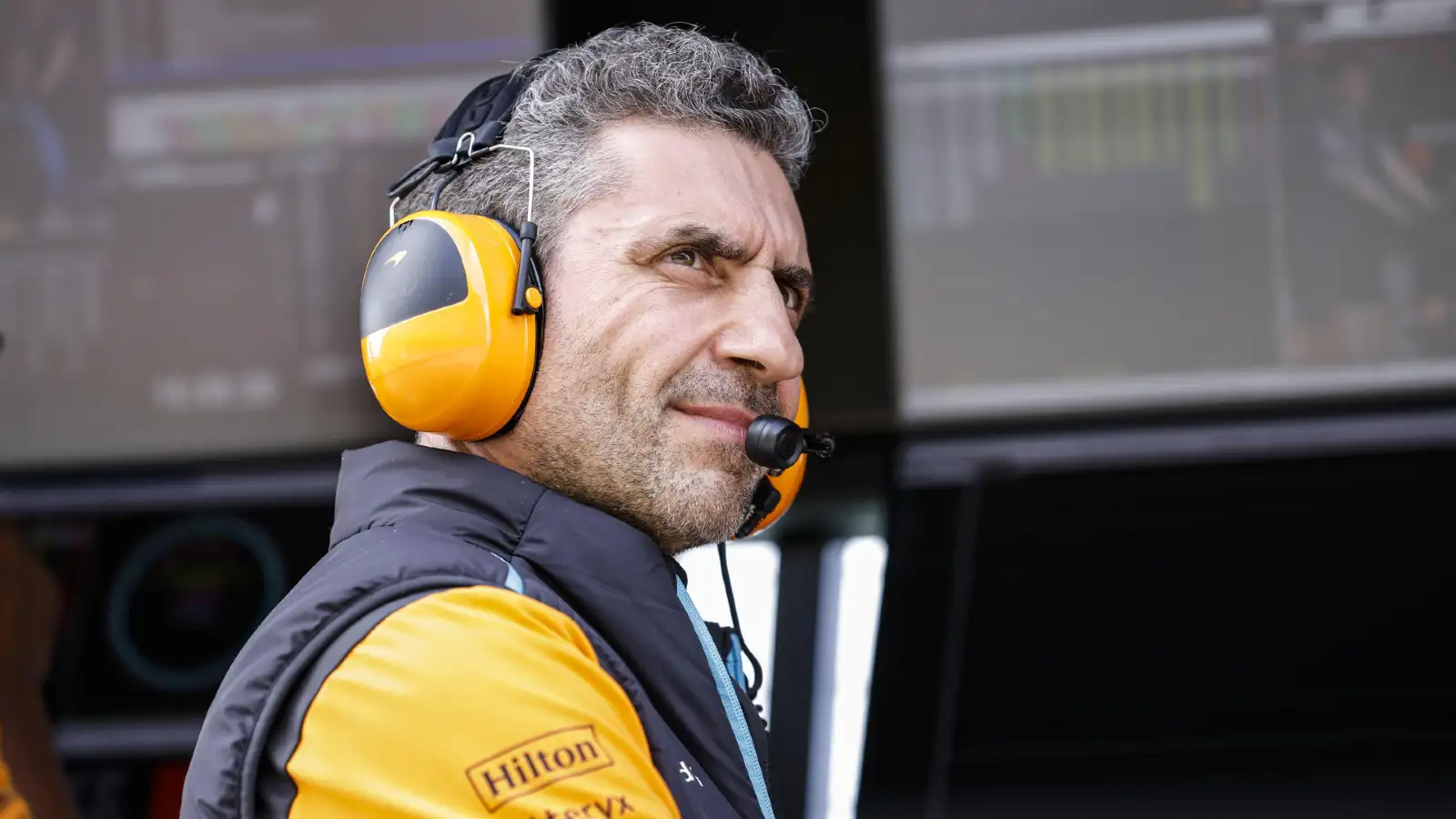
I. The Architecture of a Champion: From Chrome to Cloud
The partnership between McLaren and Google, which began with prominent branding on the engine cover and wheel covers (Chrome wheels), runs far deeper than marketing. It is a fundamental technological integration.
A. The Challenge of the 2025 Season
Coming off their 2024 Constructors’ win, McLaren faced immense pressure in 2025. Rivals had copied their aero concepts, and the grid was tighter than ever. A. The Data Explosion: The 2025 MCL39 challenger featured even more sensors than its predecessor, generating terabytes of data per race weekend. B. The Need for Speed (Data): The team needed to process this data faster than Max Verstappen or Charles Leclerc could drive. Traditional on-premise servers were no longer sufficient.
B. Google Cloud’s Infrastructure
McLaren migrated the core of its race operations to Google Cloud’s secure and scalable environment. A. BigQuery for Telemetry: The team utilized BigQuery, Google’s enterprise data warehouse, to ingest real-time telemetry from Lando Norris’s car. This allowed engineers to query petabytes of historical data in seconds, comparing Norris’s current lap in Abu Dhabi with Piastri’s simulator laps or historical data from 2024. B. Looker for Visualization: Raw data is useless if it’s not readable. McLaren used Looker to create real-time dashboards for the pit wall. These dashboards visualized tire degradation, fuel load, and energy deployment strategies instantly, allowing Andrea Stella to make split-second decisions with absolute confidence.
II. Race Strategy 2.0: Predicting the Future
The 2025 season was defined by chaotic races—rain in Brazil, safety cars in Singapore, and red flags in Monaco. McLaren won these races not just by driving faster, but by thinking faster.
A. AI-Powered Simulations (Vertex AI)
![Apa itu Vertex AI? Definisi, Penggunaan, dan Lainnya [2025] | Guru](https://cloud.mojok.co/wp-content/uploads/2025/12/671776aafb36a9c2cbc908a0_669e7fe5698e0097ad95e79d_What20is20Vertex20AI_.png)
The secret weapon in McLaren’s arsenal was Vertex AI, Google Cloud’s unified artificial intelligence platform. A. Running Millions of Scenarios: Before the lights went out in Abu Dhabi, McLaren had already “raced” the Grand Prix millions of times virtually. Vertex AI ran Monte Carlo simulations considering every variable: a Safety Car on Lap 15, a slow pit stop, a sudden drop in track temperature, or aggressive defense from Ferrari. B. Live Strategy Adjustment: During the pivotal moment of the season finale, when Norris was stuck behind a slower car, the AI calculated the “Undercut” probability with 99.9% accuracy. It advised the team to pit precisely on Lap 22, a move that seemed premature to human observers but resulted in Norris emerging in clean air, ultimately securing the championship.
B. Transcript and Communication Intelligence
Communication breakdown can lose championships. Google Cloud helped solve this. A. Speech-to-Text API: In the heat of battle, radio messages can be garbled. McLaren utilized Google’s advanced AI speech-to-text to instantly transcribe radio traffic from all 20 drivers on the grid. B. Natural Language Processing (NLP): The system analyzed rival teams’ radio messages to detect keywords like “tires are gone” or “planning Plan B.” This gave McLaren’s strategists a “god-like” view of their opponents’ vulnerabilities, allowing them to attack exactly when rivals were weak.
III. Lando Norris: The Data-Driven Driver
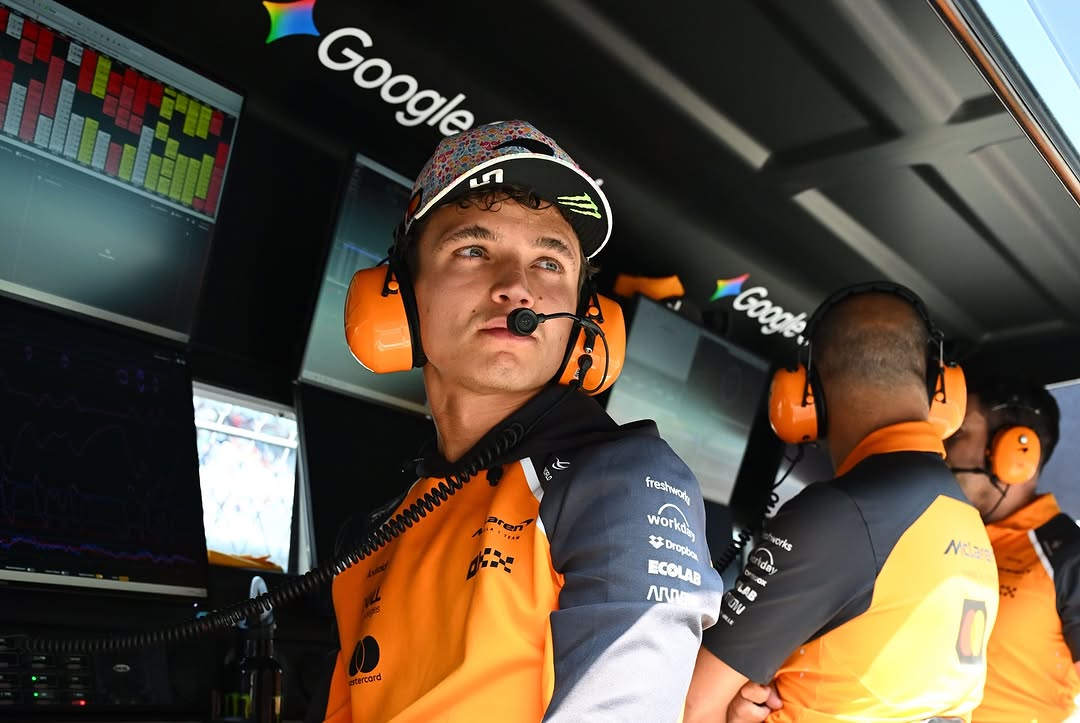
Lando Norris’s journey to his first World Championship in 2025 was a testament to his maturation as a driver, but he openly credits the technology for sharpening his edge.
A. The Android Integration
The ecosystem extended to the devices used by the team. A. 5G-Enabled Tablets: Norris and his engineers used 5G-enabled Samsung Galaxy tablets (powered by Android) to review data instantly upon stepping out of the car. B. Instant Feedback Loop: Using Google Cloud, data from the car was synced to these tablets in milliseconds. Norris could zoom in on a specific corner trace, overlaying his braking point with his teammate’s, identifying exactly where he could find the 0.05 seconds needed for Pole Position.
B. Optimizing Driver Performance
The grueling 24-race calendar of 2025 took a toll on drivers. A. Biometric Analysis: Google Cloud analyzed Lando’s biometric data—heart rate, recovery sleep, reaction times. B. Personalized Recovery: The AI suggested optimal sleep schedules and hydration plans to ensure Norris was at peak cognitive function for the title decider in Abu Dhabi, preventing the mental fatigue that plagued his rivals late in the season.
IV. Engineering Excellence: The Continuous Development War
Winning the Constructors’ Championship back-to-back (2024 & 2025) requires a car that evolves every single week. The MCL39 that won in Bahrain was vastly different from the one that won in Abu Dhabi.
A. CFD and Google Kubernetes Engine (GKE)
McLaren used Google Kubernetes Engine (GKE) to manage the massive computational workloads required for Computational Fluid Dynamics (CFD). A. Scalable Compute: When the aerodynamic department needed to test a new front wing design, GKE automatically scaled up thousands of compute nodes to run the simulation and scaled them down immediately after (Zero Waste/FinOps). B. Rapid Iteration: This speed allowed McLaren to bring upgrades to the track faster than Red Bull. While rivals waited days for simulation results, McLaren had them in hours. This rapid development cycle was the key reason they maintained their performance gap over the field throughout 2025.
B. AI-Driven Design
Google’s AI didn’t just test parts; it helped design them. A. Generative AI for Parts: Engineers used generative AI models to explore lightweight structural designs for the suspension components. The AI suggested organic shapes that reduced weight while maintaining structural integrity, contributing to the car’s superior power-to-weight ratio.
V. The Fan Experience: Bringing the Papaya Army Closer
McLaren’s success in 2025 wasn’t just on track; they won the digital engagement war as well, thanks to Google.
A. Chrome Browser Integration
McLaren launched a bespoke fan experience directly within the Google Chrome browser. A. Real-Time Telemetry for Fans: Fans could open a new tab and see the same data Lando’s engineers were seeing—live speed, gear, and throttle traces—synced perfectly with the broadcast. B. AI Commentary: Using Google’s Gemini models, the browser provided personalized, AI-generated commentary explaining the strategy to fans in simple terms, demystifying the complex world of F1 strategy.
VI. The Business of Winning: ROI and FinOps
Winning costs money, but spending efficiently wins championships under the Cost Cap.
A. Cost Cap Management with Google Cloud
The FIA’s financial regulations were stricter than ever in 2025. A. Cloud FinOps: McLaren utilized Google Cloud’s cost management tools to track every cent of compute spend. By using Spot VMs (spare compute capacity) for non-critical simulations, they saved millions in IT costs. B. Reinvesting in Performance: These savings were redirected into car development. Every dollar saved on servers was a dollar spent on making the car faster. This efficiency was the “Double World Title” difference.
Conclusion

The image of Lando Norris lifting the Drivers’ World Championship trophy in Abu Dhabi 2025 is iconic. But the invisible scaffolding that held him up was built by Google Cloud. By integrating the world’s most advanced data analytics, AI, and cloud infrastructure, McLaren didn’t just race; they outsmarted, out-developed, and out-lasted the competition.
The “Double World Titles” of 2025 are proof that in the modern era, F1 is no longer just a sport of mechanics; it is a sport of information. McLaren and Google Cloud have set a new standard. For the rest of the grid, the message is clear: catch up in the cloud, or get left behind on the track. As we look towards 2026, the partnership stands as the ultimate case study of how digital transformation drives tangible, world-conquering success.