The cloud was sold on a promise of efficiency, agility, and cost savings. Yet, for many enterprises, the reality is a paradoxical nightmare: unchecked spending, unpredictable bills, and colossal waste. Global cloud spending is projected to reach trillions, but industry analysts estimate that up to 30% of this spend is pure waste—resources provisioned but unused, or simply mismanaged. This enormous gap between promise and reality is where the secret to achieving Maximum Profit and Zero Waste lies.
Mastering the cloud means moving beyond technical deployment and embracing financial accountability. The modern goal is not just to run in the cloud, but to run profitably. This is the core mandate of FinOps (Cloud Financial Operations), the cultural and operational discipline that unites technology, finance, and business teams to collaboratively make data-driven decisions on cloud spending.
This definitive guide will unlock the secrets used by the most profitable, hyper-efficient cloud organizations. We will detail the advanced strategies, tooling, and cultural shifts necessary to stop the financial bleeding, optimize every dollar spent, and transform your cloud infrastructure from a hidden cost center into a transparent engine of profit.

I. Unmasking the Seven Sins of Cloud Waste
To achieve zero waste, we must first identify and eliminate the most common, insidious forms of financial inefficiency that plague large cloud environments.
A. The Sin of Idle Compute Resources
This is the most widespread form of waste. Resources (Virtual Machines, Databases) are provisioned for a spike in activity, but then left running 24/7, billed hourly, while serving no purpose.
A. Zombie Infrastructure: Instances (VMs) that are running but have no assigned workload or attached application. They were often launched for testing or temporary needs and forgotten. B. Unattended Development Environments: Non-production environments (Dev, Test, QA, Staging) that are left running overnight, weekends, and holidays. These environments do not contribute revenue outside of working hours but consume significant budget. C. Orphaned Storage: Storage volumes (e.g., EBS volumes in AWS, Persistent Disks in GCP) that remain after the virtual machine they were attached to has been terminated. These unattached volumes continue to incur storage fees indefinitely.

B. The Sin of Oversized Resources (Rightsizing Failure)
When launching a new application, engineers often choose instance sizes that are significantly larger than necessary (the “just in case” padding).
A. CPU and Memory Oversubscription: Selecting an instance with 32 CPU cores when the actual peak utilization never exceeds 8 cores. The organization pays for the unused capacity. B. I/O Bottleneck: Provisioning expensive, high-IOPS (Input/Output Operations Per Second) storage tiers for workloads that only require standard performance. C. Lack of Performance Monitoring: The failure to continuously monitor resource utilization metrics over a long period (e.g., 30-90 days) means optimization recommendations are based on guesswork, not fact.
C. The Sin of Data and Networking Inefficiency
The way data is stored, moved, and retrieved carries hidden, hefty fees.
A. Unmanaged Data Tiering: Storing archival or rarely accessed data (cold data) in expensive, hot storage classes instead of moving it to highly-discounted archive tiers (like AWS Glacier or Azure Archive Storage). B. The Egress Tax: Data egress (moving data out of a cloud provider or region) is highly expensive. Unoptimized data transfer, unnecessary replication between regions, or incorrect architecture design can lead to crippling egress bills.
D. The Sin of License and Software Waste
A major issue in hybrid and multi-cloud environments is the management of traditional software licenses.
A. License Mobility Failure: The inability to correctly move or utilize existing on-premises software licenses (like Oracle or Windows Server) onto cloud infrastructure, forcing the purchase of new, expensive, bundled licenses. B. Unused Marketplace Subscriptions: Subscribing to third-party tools or images from the cloud marketplace and leaving them inactive while still incurring monthly subscription fees.
II. The FinOps Playbook: Maximum Profit Strategies
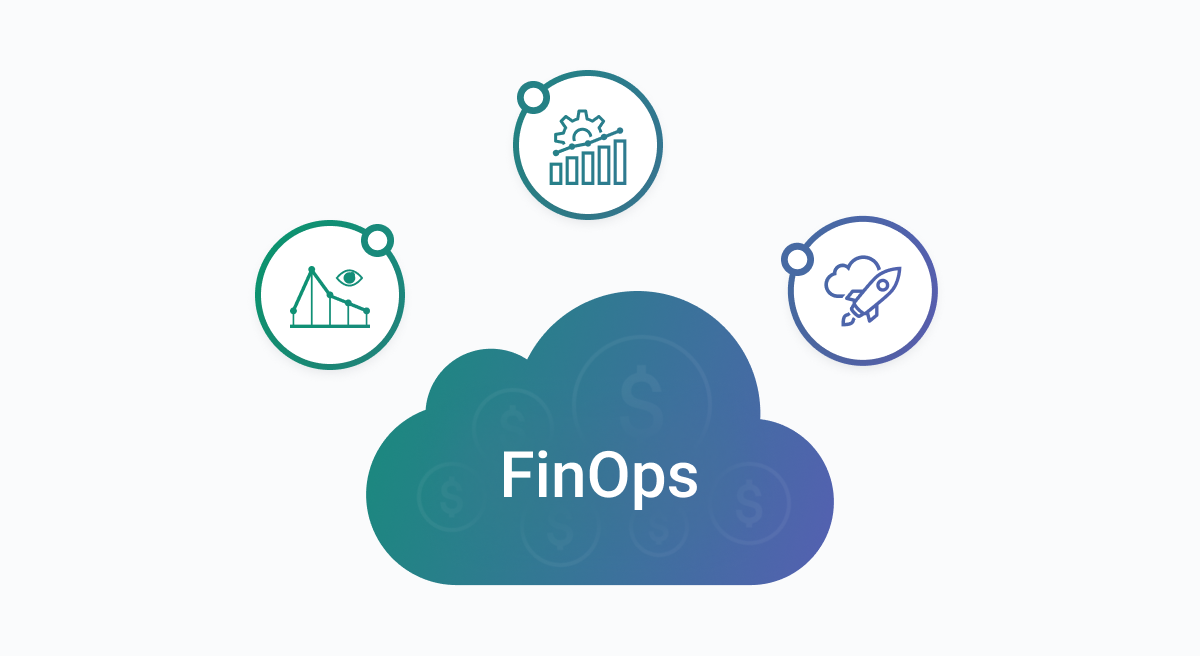
FinOps provides the structural and cultural framework to enforce zero waste. It’s built on three core phases: Inform, Optimize, and Operate.
A. Phase 1: Inform (Visibility is Currency)
You cannot save money if you don’t know exactly where it is being spent. The foundation of FinOps is granular, real-time visibility.
A. Centralized Cost Reporting (The Single Pane): Utilize a Cloud Management Platform (CMP) or a specialized FinOps tool to aggregate billing data from all providers (AWS, Azure, GCP, on-premises) into one unified dashboard. This replaces siloed, vendor-specific billing consoles. B. Granular Cost Attribution (Tagging Mandate): Enforce mandatory, standardized tagging policies. Every resource must be labelled with tags like business_unit, environment, project_id, and owner. This allows costs to be accurately attributed and charged back (or shown back) to the responsible team. C. Alerting and Anomaly Detection: Implement automated systems that track historical spending patterns and immediately notify the appropriate team when spending deviates significantly (e.g., 10% over the historical average). This catches runaway costs before the bill arrives.
B. Phase 2: Optimize (Turning Waste into Capital)
Optimization is the proactive act of rightsizing and purchasing strategically. This is where most immediate profit is realized.
A. Automated Rightsizing: Use AI/ML-driven tools to analyze utilization metrics (CPU, memory, network I/O) over 30-90 days. The tools should automatically generate and apply recommendations to downgrade oversized instances to smaller, cheaper, but equally performant tiers. B. Resource Scheduling Automation: Implement orchestration scripts (e.g., using Lambda, Azure Functions, or specialized scheduling tools) to automatically terminate or suspend non-production environments after working hours and restart them before the next day. This is the fastest, lowest-effort way to save 30-60% of Dev/Test costs. C. Storage Lifecycle Management: Define and automate policies to move data through different storage classes as it “ages.” For instance, data older than 30 days is automatically moved from Standard to Infrequent Access; data older than 90 days is moved to Archive.
C. Phase 3: Operate (Governing for the Future)
The operate phase ensures that cost efficiency is a continuous, cultural discipline, not a one-time project.
A. Establishing a Procurement Strategy: The FinOps team works with procurement to lock in discounts through volume and commitment. The two primary methods are: 1. Reserved Instances (RIs): Committing to a specific instance type/region for 1 or 3 years. 2. Savings Plans: A flexible commitment to spend a certain dollar amount per hour for 1 or 3 years across a cloud provider’s compute services. B. Implementing FinOps Guardrails: Instead of hard “gates” that block deployment, implement “guardrails”—soft controls that notify and educate. For example, a developer can launch an expensive resource, but the automated system immediately sends an alert to the team lead detailing the cost implication, requiring explicit confirmation before the resource is finalized. C. Business Value Alignment: Costs are always discussed in the context of business value. Instead of saying, “You spent $5000,” the conversation becomes, “You spent $5000 to reduce customer latency by 50ms, increasing checkout conversion by 2%.”
III. The Technical Secrets: Code-Level Zero Waste
The highest level of profit optimization happens when engineers bake cost awareness directly into their code and architecture.
A. Infrastructure-as-Code (IaC) for Cost Governance
IaC tools like Terraform and CloudFormation are not just for speed; they are essential for cost control.
A. Mandating Templates: All infrastructure provisioning must be done via approved, cost-optimized IaC templates. These templates specify the correct instance sizes and include the necessary tags for cost attribution. B. Policy-as-Code (PaC): Integrate security and cost policies directly into the IaC pipeline using tools like Open Policy Agent (OPA). OPA can review the infrastructure code before deployment and block anything that violates the ‘Zero Waste’ rule (e.g., “Block creation of any storage bucket without lifecycle policies”).
B. The Serverless Paradigm: True Zero Waste Compute
Serverless computing (e.g., AWS Lambda, Azure Functions, Google Cloud Functions) is the ultimate zero-waste compute model.
A. Pay-Per-Execution: Unlike VMs, which you pay for constantly, serverless functions bill only for the exact duration of the code’s execution, rounded to the millisecond. If the application is idle, the cost is zero. B. Automatic Scaling: Serverless platforms handle scaling instantly. This eliminates the need for engineers to guess future capacity and over-provision resources, completely eradicating idle capacity waste.
C. Container Optimization with Kubernetes
If the workload cannot be serverless, the next best option is containers managed by Kubernetes (K8s).
A. Resource Requests and Limits: Architects must enforce strict resource requests and limits on all container deployments. Requests ensure the container gets the minimum resources it needs, while limits prevent containers from consuming too many resources and draining capacity from other workloads, maximizing utilization density on the underlying VM cluster. B. Cluster Autoscaling: K8s clusters must be configured with cluster autoscaling. This means the system adds new worker nodes (VMs) only when the current nodes are full and removes them when utilization drops, keeping the total number of running VMs (and thus cost) at the minimum required level.
IV. Multi-Cloud Strategy for Competitive Profitability
In a competitive market, relying on a single cloud vendor limits financial leverage. Multi-Cloud (using two or more public clouds) is a core strategy for achieving Maximum Profit through competitive pressure.
A. Strategic Workload Placement
The most profitable architects don’t choose one cloud; they choose the best cloud for each specific workload.
A. Commodity Services: Place highly standardized, easily portable services (like basic compute, storage, or containerized apps) on the cloud provider that offers the most aggressive pricing at the moment. B. Specialized Services: Use a specific cloud provider only when they have a highly differentiated, superior service (e.g., Google’s BigQuery for petabyte-scale analytics or AWS’s SageMaker for specific ML models). The slight lock-in is justified by the massive performance/feature gain.
B. Mitigating Vendor Lock-in (Portability as Insurance)
The ultimate defense against vendor lock-in is a portable architecture, which gives the organization the financial freedom to move if costs become non-competitive.
A. Unified Database Abstraction: Avoid proprietary databases. Standardize on open-source databases (PostgreSQL, MongoDB) deployed on Kubernetes, or use vendor-neutral database services (like CockroachDB), guaranteeing the ability to lift and shift the database tier if needed. B. Networking Standardization: Use tools like Service Mesh (e.g., Istio) to manage networking and security between applications across different clouds. This ensures application communication remains consistent and portable, irrespective of the underlying cloud network topology. \
V. Driving the Cultural Shift: The Cloud Profit Mindset
Technology and tools are only 50% of the solution. The other 50% is cultural: changing the mindset from unlimited consumption to responsible consumption.
A. Collaboration and Transparency
A. Engineers as Cost Owners: Engineers, who make the provisioning decisions, must be empowered and incentivized to be cost-aware. They need real-time data, not just a monthly report from finance. B. Finance as Business Partners: Finance should not just audit; they should provide valuable forecast data and procurement insights (e.g., “If you commit to $100k more compute, we can get you a 40% discount on database services”).
B. Metrics and Incentives
A. Beyond Efficiency: Track metrics that go beyond simple cost reduction. Focus on Cost per Unit of Business Value (CPUBV). Examples include: Cost per Customer, Cost per Transaction, or Cost per Feature Deployed. These metrics tie spending directly to revenue generation. B. Gamification and Rewards: Implement internal incentives for teams that demonstrate superior efficiency. For instance, a percentage of cost savings achieved by a team could be allocated to their next innovation budget.
Conclusion
The secret to achieving Maximum Profit, Zero Waste in the cloud is not a single tool or technology; it is the comprehensive, collaborative discipline of FinOps. By rigorously applying the principles of centralized visibility, automated optimization, and strategic multi-cloud architecture, organizations can eliminate the 30% waste inherent in today’s cloud spending.
The goal is to shift from reactive billing reconciliation to proactive, predictive financial operations. When engineers operate with a financial mindset, when finance provides transparent guidance, and when leadership enforces smart governance, the cloud finally delivers on its promise: becoming the scalable, flexible, and immensely profitable engine of the modern enterprise. Mastering these secrets is the single most important action an organization can take to secure its financial future in the digital economy.